
The Moon and the Inner Refuge
We Have Always Lived in the CastleThis flow traces Mary Katherine’s moon as an imaginative escape from danger and its eventual transformation into a refuge Constance can share.
increasing Bearing strength in each event
 decreasing
Bearing strength in each eventdecreasingA House on the Moon
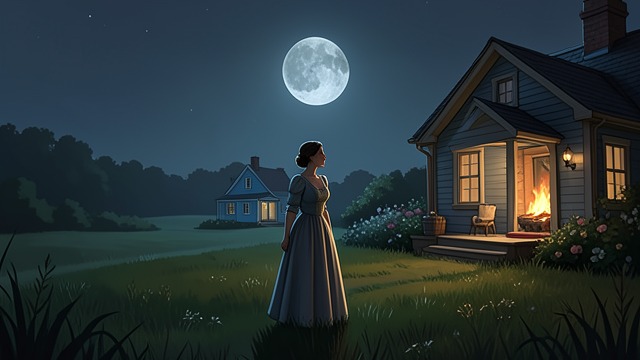
A House on the Moon
Escape by imagination
After a humiliating encounter, Mary Katherine imagines a small blue house on the moon, with a garden and a fireplace. The fantasy lets her move through the Village without engaging its hostility.
Distance from danger
The moon offers a world where the villagers cannot reach her and daily life can be remade according to her preferences. It is less a destination than a mental refuge.
The fantasy reveals both her resilience and her isolation. She has a place to retreat, but it is built alone and apart from ordinary human contact.
The Safe Lunar World
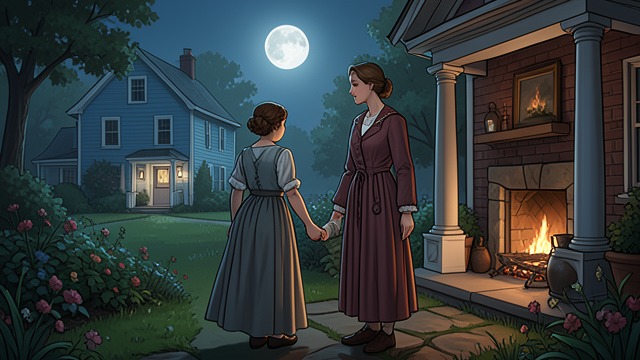
The Safe Lunar World
A world without change
Mary Katherine imagines carrying Julian to the moon, where he would be comfortable and safe. She describes a place with abundant food, steady sunlight, and dependable protections.
Fear made visible
Her fantasy intensifies as she senses an approaching change in the household. The moon answers the uncertainty she cannot explain to Constance or control through her ordinary routines.
The imagined world is emotionally persuasive because it offers perfect safety. Its perfection also exposes how little Mary Katherine trusts the real world beyond the garden.
The Refuge Under Threat
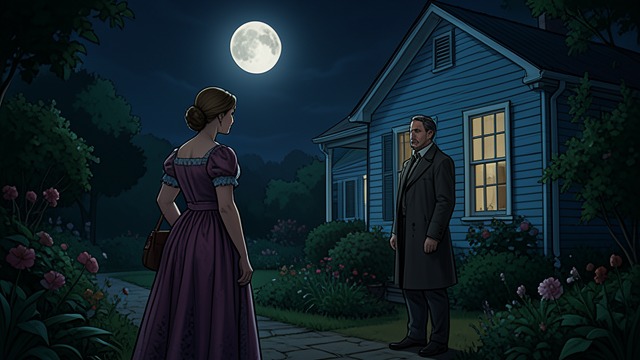
The Refuge Under Threat
A ghost in the household
Mary Katherine calls Charles a ghost and treats his presence as an attempt to invade the world she shares with Constance. She returns repeatedly to lunar images when she cannot confront him directly.
The fantasy’s limit
Charles continues to stay, use the house, and influence Constance. The moon can protect Mary Katherine inwardly but cannot by itself restore the household she wants.
The growing gap between fantasy and events pushes Mary Katherine toward physical acts of resistance. Imagination remains a refuge, but it is no longer enough.
Constance Joins the Moon
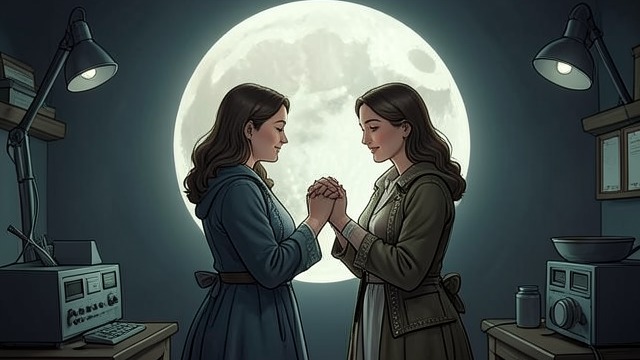
Constance Joins the Moon
A shared name for survival
Mary Katherine tells Constance that they are on the moon after the sisters have slept in the woods. Constance accepts the phrase and thanks Mary Katherine for bringing her there.
Refuge becomes relational
The fantasy now includes both sisters rather than serving only Mary Katherine’s private escape. It helps them face the return to a house damaged by fire and mob violence.
The moon’s meaning shifts from solitary protection to shared understanding. Constance does not need to believe in its literal existence for the image to comfort them both.
A Moon with Windows Boarded
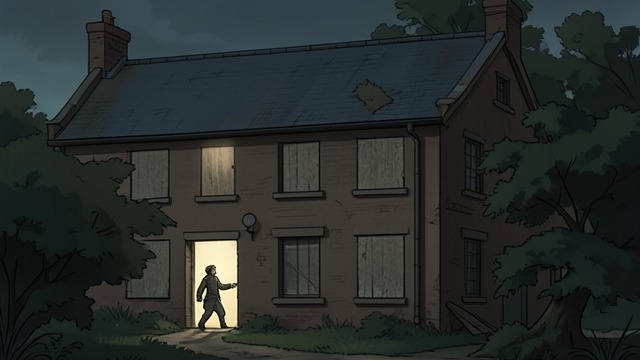
A Moon with Windows Boarded
The imagined refuge takes material form
The sisters board windows, barricade the sides of the house, and limit the outside world’s view. Their real home grows more like the protected place Mary Katherine imagined.
Contentment and confinement
Constance and Mary Katherine describe themselves as happy, even as they depend on food left by neighbors and watch strangers from narrow openings. Their safety requires sustained separation.
The lunar refuge is not uncomplicated freedom. It is a chosen shelter whose peace depends on keeping the outside at a distance.
During Mary Katherine’s walk home after Jim Donell’s taunts
On the Saturday before Charles arrives
During Charles’s first days in the house
The morning after the fire
In the sisters’ final life inside the ruined house
